



Effective brand protection requires a multi-layered defense strategy to combat counterfeiting and diversion. Overt authentication involves visible features for consumer verification, while covert authentication, utilizing invisible fluorescent pigments, provides hidden security for professional field checks.
Forensic authentication offers the highest security level, requiring laboratory analysis to confirm product legitimacy. By integrating these layers, organizations deliver robust protection without compromising packaging aesthetics. The key to success? Choosing a partner with decades of experience guaranteeing security where it matters most.
What Are Overt, Covert, and Forensic Authentication Layers?
In the context of security printing and brand protection, authentication features are categorized by their visibility and the tools required to verify them:
- Overt Features: These are public, visible elements that anyone can verify with the naked eye, such as holograms or color-shifting inks.
- Covert Features: These are hidden security marks, such as invisible fluorescent pigments, UV-only markings, and invisible barcodes, which require a specific tool (like a UV lamp or scanner) to see.
- Forensic Features: These are high-security molecular or chemical markers that can only be verified using specialized laboratory equipment or proprietary sensors.
What’s the difference between overt and covert authentication?
The primary difference between overt and covert authentication is visibility and the target audience. Overt authentication is designed for the general public and retail staff to verify instantly without tools. In contrast, covert authentication uses hidden elements, such as invisible fluorescent pigments, that remain unseen under normal light. Covert layers are intended for internal auditors and supply chain inspectors who use specialized equipment to confirm authenticity discreetly.
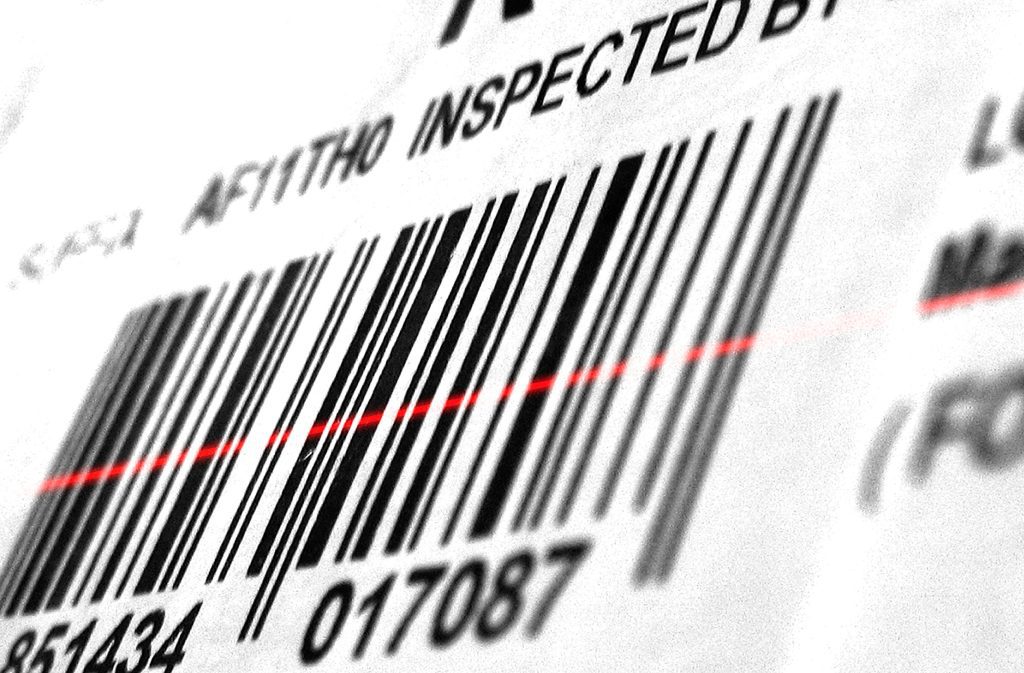
Authentication Layer Framework for Modern Brands
Modern brand protection programs rarely rely on a single technology. Instead, they utilize a layered framework to address different stakeholders within the supply chain.
1. Public / Overt Layer
- Primary Purpose: Deterrence and consumer confidence. It signals to the counterfeiter that the brand is protected and allows the consumer to perform a rapid check.
- Typical Features: Visible holograms, color-shifting Optically Variable Pigments (OVPs), and secure paper watermarks.
2. Covert Layer
- Primary Purpose: Rapid field checks and supply chain investigative proof. This layer allows inspectors to verify products without alerting counterfeiters to the specific security measures in place.
- Typical Features: Advanced fluorescent pigments, invisible UV-fluorescing barcodes, and infrared (IR) taggants. Typically, IR taggants are categorized under “forensic.” IR up-converters utilizing a 980nm pen can be considered “covert”, but many IR taggants require machine readability.
3. Forensic Layer
- Primary Purpose: Legal evidence and high-level investigative certainty. This is the “final word” in a court of law or high-stakes dispute.
- Typical Features: Unique chemical DNA, isotopic ratios, or proprietary molecular markers.
When Should Brands Use Invisible or Covert Security Features?
Brands should use invisible security features when they need to verify product authenticity without altering the visual design of the packaging. Invisible features are essential for tracking gray market diversion, protecting luxury aesthetics where visible marks might be obtrusive, and adding a layer of security that is difficult for casual counterfeiters to detect or replicate. They’re also vital for internal audit processes where discreet verification is required.
Industry Use Cases for Covert Security Features
- Premium Spirits: Invisible barcodes under UV light allow for “track and trace” to prevent the refilling of authentic bottles with inferior product.
- Luxury Cosmetics: Advanced fluorescent pigments integrated into labels ensure authenticity without interfering with the high-end, minimalist aesthetic of the brand.
- Pharmaceuticals: Covert markings on blister packs help distributors verify genuine medicine quickly in the field using handheld UV scanners.
- Government Tax Stamps: Invisible pigments provide a secondary layer of validation for high-value revenue stamps on tobacco or alcohol, ensuring tax compliance.
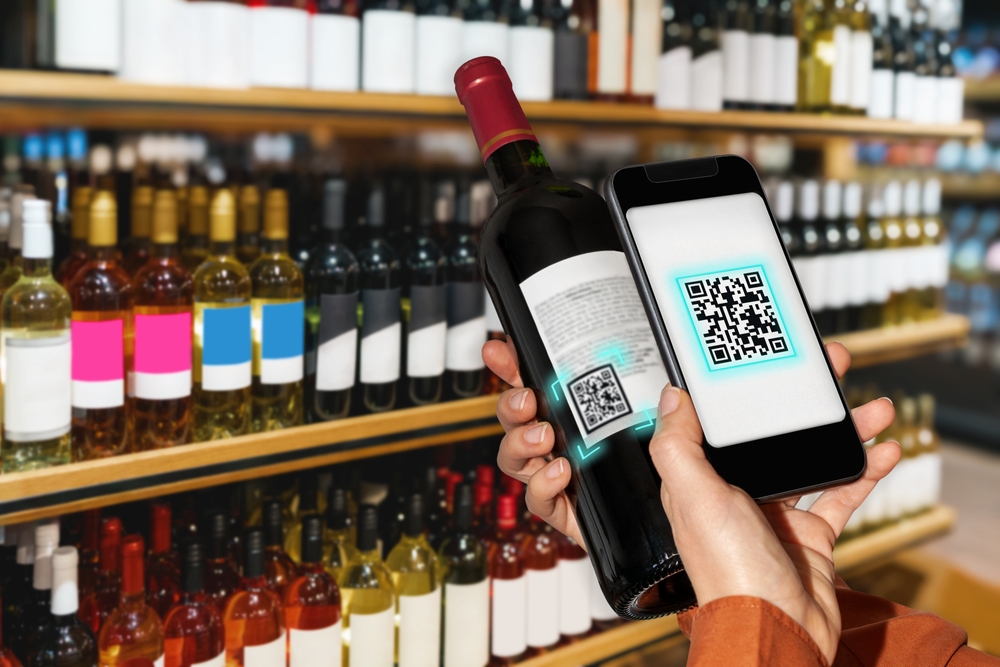
Cost-Benefit Analysis by Authentication Layer
Choosing the right mix of features requires balancing the implementation effort against the level of security provided. Angstrom Technologies, Inc. specializes in high-value covert and overt solutions that provide a high “security-to-cost” ratio.
| Feature Layer | Implementation Cost | Impact on Packaging Aesthetics | Ease of Verification | Deterrence Level |
|---|---|---|---|---|
| Overt | Medium | High (Changes visual look)cluding the chemical composition of pigments and surface coatings. | Instant (Naked eye) | Moderate (Visual deterrent) |
| Covert | Medium | Zero (Invisible) | Rapid (UV light/Scanner) | High (Hard to replicate) |
| Forensic | High | Zero (Invisible) | Slow (Lab only) | Extreme (Legal proof) |
Advanced fluorescent pigments and invisible UV barcodes deliver strong security with minimal design disruption, allowing brand managers to maintain the integrity of their artwork while providing security consultants with the tools they need for field audits.
Threat Modeling: Which Layers Stop Which Attacks?
In brand protection, threat modeling is the process of identifying potential vulnerabilities in the supply chain and mapping specific security features to mitigate those risks.
Types of Threats
- Casual Counterfeits: Deceive the consumer with a look-alike.
- Most Effective Layer(s): Overt, such as color-shifting OVPs.
- Organized Fakes: Pass professional inspection.
- Most Effective Layer(s): Covert and forensic, such as invisible fluorescent pigments.
- Gray Market Diversion: Sell a genuine product in unauthorized regions.
- Most Effective Layer(s): Covert, such as invisible UV barcodes or IRTs.
- Returns Fraud: Return a fake product for a refund.
- Most Effective Layer(s): Covert, such as invisible watermarks.
- Overproduction: Factory prints extra units for side sale.
- Most Effective Layer(s): Covert and forensic, such as proprietary UV-fluorescent ink.
Technology Comparison Matrix: Invisible Pigments vs. Visible Security Features
| Technology | Visibility | Verification Tools | Primary Use Case | Pros | Considerations |
|---|---|---|---|---|---|
| Invisible Fluorescent Pigments | Invisible | UV Lamp / Scanner | Brand protection, Track & Trace | No design impact; high security | Requires a UV light source |
| Visible OVPs | Highly Visible | Naked Eye | Consumer-facing deterrence | Hard to photocopy; easy for users | Changes label colors |
| Holograms | Highly Visible | Naked Eye | High-value documents | Familiar to consumers | Can be imitated by skilled fakes |
| Invisible Barcodes | Invisible | Specialized UV Scanners | Diversion control | Data-rich; hidden from the public | Requires scanner integration |
Implementation Decision Tree: Choosing the Right Approach
Selecting the appropriate security features is a strategic process. Angstrom Technologies, Inc. recommends following this five-step decision tree:
- Assess Regulatory Requirements: Determine if your industry (e.g., Pharma or Tobacco) mandates specific track-and-trace or anti-counterfeiting features.
- Define Threat Scenarios: Identify if your primary risk is retail-level counterfeiting, internal diversion, or high-end laboratory-grade faking.
- Decide on Visibility: Choose if the security feature should be a visible deterrent for the consumer or a hidden tool for the investigator.
- Evaluate Integration: Review your current printing and packaging workflow. Ensure the chosen pigments or inks are compatible with your existing equipment.
- Select Technologies: Finalize the mix of advanced fluorescent pigments, OVPs, or taggants. Plan a pilot test to ensure verification tools work consistently in the field.

How Angstrom Technologies Inc. Supports Layered Authentication Programs
For over 40 years, Angstrom Technologies, Inc. has served as a primary partner for brands requiring sophisticated security printing solutions. As a U.S.-based leader, we provide a level of agility and technical expertise that large-scale chemical conglomerates often cannot match.
Angstrom Technologies, Inc. specializes in the development and manufacture of advanced fluorescent pigments, invisible barcodes, and multi-layer authentication systems. Our solutions are engineered to be:
- Highly Compatible: Seamlessly integrating into existing flexographic, offset, and digital printing workflows.
- Regulatory Ready: Formulated to meet rigorous industry standards for safety and compliance.
- Secure & Proprietary: Offering unique light-frequency responses that are difficult for counterfeiters to analyze or reproduce.
Engaging with the experts at Angstrom Technologies, Inc. early in the packaging design cycle allows for the most cost-effective and secure integration of these technologies.
Overt vs. Covert Authentication FAQs
No. When properly formulated and applied, advanced fluorescent pigments from Angstrom Technologies, Inc. are completely transparent under standard ambient light. They do not alter the color, texture, or gloss of the packaging, allowing brand managers to maintain their original design intent without compromise.
Covert authentication is typically verified using handheld tools. This can range from simple, portable UV lamps that reveal a glowing mark to sophisticated, high-speed scanners designed to read invisible barcodes or QR codes. These tools allow field inspectors and distributors to verify products in seconds.
Yes. In fact, combining these features is a “best practice” in layered authentication. The overt hologram provides a visible deterrent for consumers, while the invisible UV barcode allows for secure, data-rich tracking that is hidden from the public and counterfeiters.
The equipment depends on the pigment’s properties. Most covert features require a UV light source in specific wavelengths (such as 254nm or 365nm). For data-driven security, specialized optical scanners or modified mobile devices are used to capture and decode invisible barcodes.
ROI is measured through the reduction in counterfeit seizures, the prevention of gray market revenue loss, and the mitigation of legal risks associated with fake products. Additionally, invisible barcodes provide supply chain data that can improve inventory accuracy and operational efficiency.
Connect With Angstrom’s Security Specialists
Developing a foolproof brand protection strategy requires more than just buying ink; it requires a partnership with technical experts. Angstrom Technologies, Inc. offers collaborative solution design, proof-of-concept testing, and deep technical support to ensure your authentication layers are effective and scalable.
Ready to get started? Schedule a technical consultation to review your current authentication strategy and secure your brand.