


A multi-layered security approach is a strategic defense-in-depth framework that utilizes multiple authentication technologies—overt, covert, and forensic—to protect products. By stacking these layers, brands ensure that if one feature is bypassed by a counterfeiter, others remain to provide verification.
This comprehensive system deters casual fakes, tracks gray-market diversion, and provides high-level legal evidence to safeguard brand equity and consumer safety. In today’s world, counterfeiters have many tricks at their disposal, but a multi-layered security approach can safeguard your brand from unauthorized interference, damaged customer trust, and compliance risks.

What Are the Three Levels of Security Features?
A robust brand protection strategy relies on three distinct levels of authentication. Each serves a different stakeholder in the supply chain:
- Overt (Level 1): Visible features designed for the general public and retail staff to verify instantly without tools.
- Covert (Level 2): Hidden features, such as advanced covert security features using invisible fluorescent pigments, that require specialized tools (UV lights or scanners) for field inspection.
- Forensic (Level 3): Molecular-level markers verifiable only through laboratory analysis or proprietary sensors for legal and investigative certainty.
Level 1: Overt Security (Public Verification)
Overt features act as the first line of defense. Their primary goal is immediate deterrence. As of 2026, global counterfeiting losses have surpassed $600 billion annually, making visible deterrents essential for maintaining consumer trust.
- Examples: Holograms, color-shifting optically variable pigments (OVPs), and secure watermarks.
- Pros: Instant verification; no equipment needed.
- Cons: Highly visible to counterfeiters, who may attempt to simulate the “look” of the feature.
Level 2: Covert Security (Professional Authentication)
Covert security is hidden from the naked eye. Angstrom Technologies, Inc. specializes in advanced covert security features like invisible barcodes and UV-fluorescing inks. These are vital for detecting “gray market” diversion, where authentic goods are sold in unauthorized territories.
- Examples: Invisible fluorescent pigments, infrared (IR) taggants, and microtext.
- Pros: Difficult to detect and replicate; does not interfere with packaging aesthetics.
- Cons: Requires basic tools like UV lamps or handheld scanners.
Level 3: Forensic Security (Investigative Proof)
Forensic layers provide the “smoking gun” for legal proceedings. These features offer the highest ROI when a brand needs to prove a counterfeit in court or during a high-stakes audit.
- Examples: Chemical DNA, unique isotopic signatures, and proprietary molecular taggants.
- Pros: Nearly impossible to reverse-engineer; provides 100% certainty.
- Cons: Verification is not instantaneous and typically requires lab equipment.
Overt vs. Covert Security: What’s the Difference?
The difference between overt and covert security is visibility and intent. Overt security is visible to the naked eye and is used by consumers to quickly confirm a product’s legitimacy on the shelf.
Covert security is invisible under normal light. Auditors and law enforcement use it to discreetly verify products. Combining both ensures that a brand is protected at the point of sale and throughout the supply chain.
Why a Multi-Layered Security Approach Wins
In the modern landscape, relying on a single security feature is a vulnerability. A multi-layered security approach creates an “escalating cost of entry” for counterfeiters.
- Deterrence: Overt features stop casual “garage” counterfeiters.
- Detection: Covert features, such as advanced fluorescent pigments, catch sophisticated fakes that bypass visible checks.
- Enforcement: Forensic features provide the evidence needed to take legal action against organized criminal rings.
Technical Breakdown: Development, Function, and Verification of Multi-Layered Security Features
To build a robust multi-layered security approach, it is essential to understand the technical lifecycle of each feature, from the laboratory to the field. Below is a detailed breakdown of how Angstrom Technologies, Inc. engineers and utilizes these technologies to protect global brands.
1. Overt Features (Visible)
Overt features are developed using specialized materials that interact with ambient light to create distinct visual effects.
- Examples: Color-shifting optically variable pigments (OVPs), holographic foils, and security threads.
- How They Are Developed: These are often created through vacuum deposition or multi-layer thin-film interference. For example, OVPs are made of microscopic “flakes” that act like high-precision filters, reflecting only specific wavelengths of light.
- How They Function: They rely on “tilt-to-verify” physics. As the viewing angle changes, the light path through the pigment layers shifts, causing a dramatic color change (e.g., green to gold).
- How They Are Verified: Human sight. No equipment is required, making this the primary layer for consumer interaction.
2. Covert Features (Hidden)
Covert features, such as advanced fluorescent pigments, are engineered to be invisible under the visible light spectrum (roughly 380–700 nm) but highly active in other ranges.
- Examples: Invisible UV fluorescent inks, invisible barcodes, and infrared (IR) up-converting pigments.
- How They Are Developed: Angstrom Technologies, Inc. synthesizes these using complex organic and inorganic compounds. These pigments are milled to sub-micron sizes, ensuring they can be integrated into standard printing inks without affecting the ink’s flow or the final print’s texture.
- How They Function: These materials utilize “Stokes Shift” or “Anti-Stokes” principles. When the pigment is struck by a specific wavelength of energy (like UV light), the electrons are excited and emit a glow in a different, visible color.
- How They Are Verified: Detection and verification require a specialized light source or scanner. Field inspectors use handheld UV lamps or smartphone-integrated scanners to reveal the hidden mark.
3. Forensic Features (Molecular)
Forensic features are the most scientifically complex, acting as a “molecular fingerprint” for the product.
- Examples: Rare-earth element taggants, chemical DNA markers, and micro-particle “sand” with unique digital codes.
- How They Are Developed: These are developed at the molecular level. Chemists create a unique “recipe” or signature that is exclusive to a single brand or even a single product batch. These markers are often inert and can be embedded directly into the product material or the packaging substrate.
- How They Function: They remain dormant and undetectable by standard UV lights or scanners. They function as a hidden data carrier that can only be unlocked by a specific chemical or light-frequency “key.”
- How They Are Verified: Laboratory analysis. Samples are typically sent to a facility where technologies like mass spectrometry, gas chromatography, or proprietary high-resolution sensors confirm the presence of the unique molecular signature.
Angstrom Technologies, Inc. specializes in integrating these layers. By choosing advanced covert pigments, for instance, a brand can maintain its distinct packaging design while embedding a high-security layer that only authorized personnel can see.
Multi-Layered Security FAQs
You shouldn’t choose one over the other. A successful strategy uses overt features for consumer confidence and covert features for supply chain integrity. Overt catches the eye; covert catches the criminal.
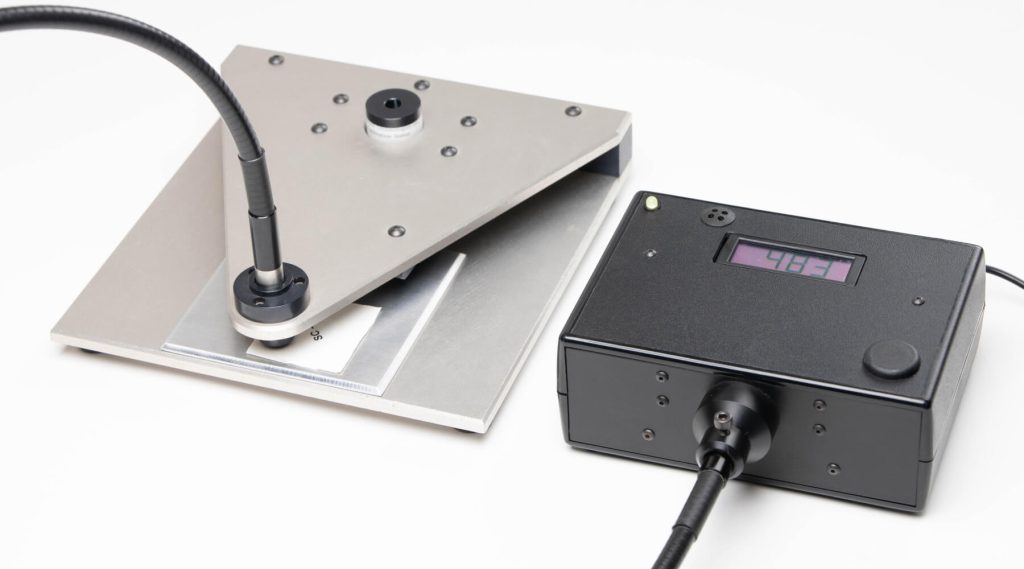
Most covert features are verified using handheld UV lamps or specialized optical scanners. These tools are portable, affordable, and provide instant “pass/fail” results in the field.
Yes. Angstrom Technologies, Inc. designs advanced pigments and inks that are compatible with standard flexographic, offset, and digital printing processes, requiring minimal changes to your production line.
The ROI is found in legal protection and large-scale fraud prevention. One successful forensic verification can save a brand millions in liability and recovered revenue during litigation.
Many of our solutions are formulated for use in highly regulated industries. Angstrom Technologies, Inc. works closely with clients to ensure all security pigments meet necessary safety and compliance standards.
Ready to Build Your Multi-Layered Security Strategy?
Building a resilient brand protection program requires technical expertise and a customized approach. From advanced invisible pigments to comprehensive tax stamp solutions, we’re your agile partner in authentication. Reach out online, or give us a call to get started.